SpaceX’s Starship is back in the technology conversation after an orbital return and launch-site catch reported over the weekend. The Associated Press described the spacecraft’s recovery in a November 14 report. For readers encountering a newly published headline today, that date matters: the report timestamp and the underlying mission event are different pieces of information.
The development has an obvious spaceflight angle. For businesses following AI, it also raises a useful question: which infrastructure milestones could eventually change what digital products can do, and which effects are still assumptions? This article’s business implications are Vendovo analysis, rather than claims that a launch has already improved an AI model or reduced a customer’s bill.
What the mission page actually establishes
SpaceX’s Flight 15 mission page describes a planned return-to-launch-site profile, an extended orbital flight and separate recovery objectives for the spacecraft and booster. Its published plan calls for roughly 14 orbits at around 275 kilometres. A mission plan describes intended operations; it is important to read that alongside subsequent reporting about what happened.
A spacecraft catch, a booster recovery, payload deployment and a repeat flight are separate achievements. Reporting should identify the specific milestone being discussed. Successful recovery alone does not establish turnaround time, routine reliability, future capacity or a commercial price. Those require their own evidence.
Why AI builders should follow infrastructure carefully
An AI-powered application depends on more than its chat interface. It needs a model service, network access, data storage, permissions, monitoring and a way to recover when one of those dependencies fails. Infrastructure news becomes commercially meaningful when a developer can connect it to an available service with measurable behaviour.
For example, a proposed improvement to connectivity would matter differently to a field-service app than to an office writing assistant. A field team may care about coverage, latency and whether an inspection record survives an interrupted connection. A writing workflow may care more about model quality, response time and the privacy terms attached to uploaded documents. The relevant question is the user’s job and operating environment.
Space-sector milestones are therefore worth following without treating every technical demonstration as a product a business can buy today. A compelling engineering result can justify closer attention and further research. A procurement or software-design decision still needs specifications, access, pricing and operational evidence.
A practical checklist for the next big AI infrastructure claim
- Identify what was actually demonstrated, and distinguish it from a planned capability.
- Check the event date, the publication date and whether a story has been updated.
- Look for a primary mission or product page, then examine credible follow-up reporting.
- Ask whether there is a documented service, supported API or generally available offering.
- Check availability, regional limits, reliability commitments and the complete cost of use.
- Keep a fallback path when the promised infrastructure is unavailable or interrupted.
This is also a useful way to evaluate ordinary software announcements. A new model benchmark, an announced partnership and an accessible developer feature answer different questions. A small team can save time by documenting which claims are established and which would need a test before they influence a build.
Turn the headline into a useful project question
Instead of adding a feature simply because its underlying technology is receiving attention, describe one workflow you want to improve. Who is using it? What information does it need? What happens when the network drops, a model refuses a task, or a result needs human review?
That makes the next step concrete. A prototype can test the uncertain part while a clear project brief keeps the surrounding scope manageable. Our web application development team and mobile app development team can help scope those decisions around an actual business workflow.
For questions, research and creative work, you can also explore Aura. Account access, feature availability and credit controls apply. Aura is not affiliated with SpaceX, and this article does not claim a partnership or access to mission systems.
Sources and image context
The linked SpaceX mission page is the primary source for the planned flight profile; the linked Associated Press report supplies the recovery reporting. No stock-price prediction, investment recommendation or independently measured AI performance claim is made here.
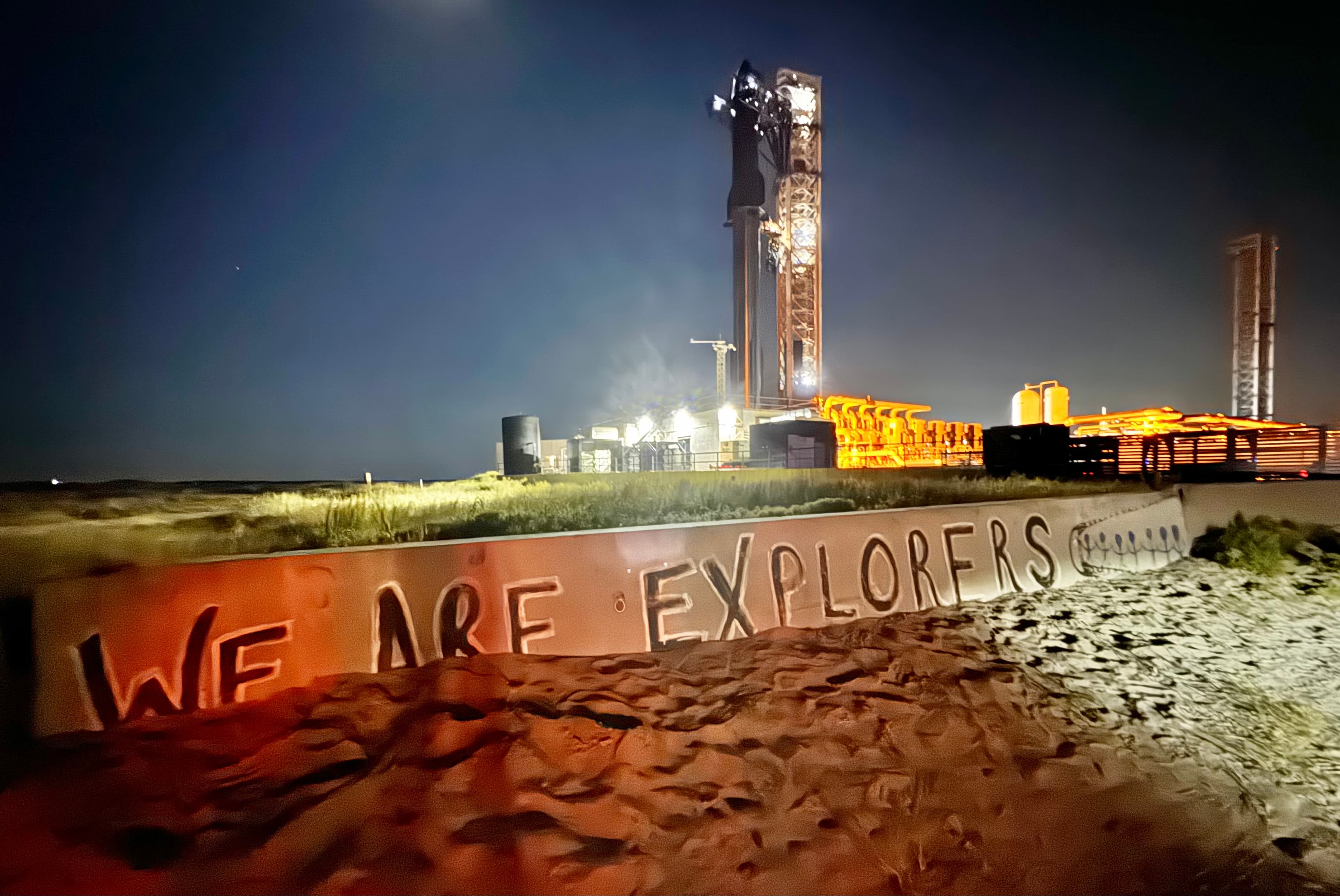
The cover is an archival photograph of Starship before Flight 5 on October 12, 2024—not an image of the November 2026 catch. Photograph: Steve Jurvetson, original photo and attribution, licensed CC BY 2.0. The original photograph is displayed with a responsive crop.